Why Restaurant Tables Deserve More Attention Than Most Operators Give Them
In many restaurant projects, tables are selected late in the process, often based on appearance or price. Yet in daily operation, restaurant tables directly affect stability, service efficiency, and long-term maintenance cost.
A table that looks fine in a showroom can become a constant problem once service begins.
Table Stability Is Not Just a Furniture Issue
Unstable tables create repeated disruptions during service. Plates shift, drinks spill, and staff are forced to intervene unnecessarily.
Table stability depends on base design, weight distribution, and how the table interacts with the floor and layout, not just on tabletop thickness.
Restaurants with high table turnover feel this problem most clearly.
How Table Base Design Impacts Daily Service
Different table base designs perform very differently in commercial environments.
Common factors that influence performance include:
Base footprint size and balance
Center-base versus four-leg configurations
Structural connection between base and tabletop
Poor table base design leads to wobbling, uneven load distribution, and faster wear over time.
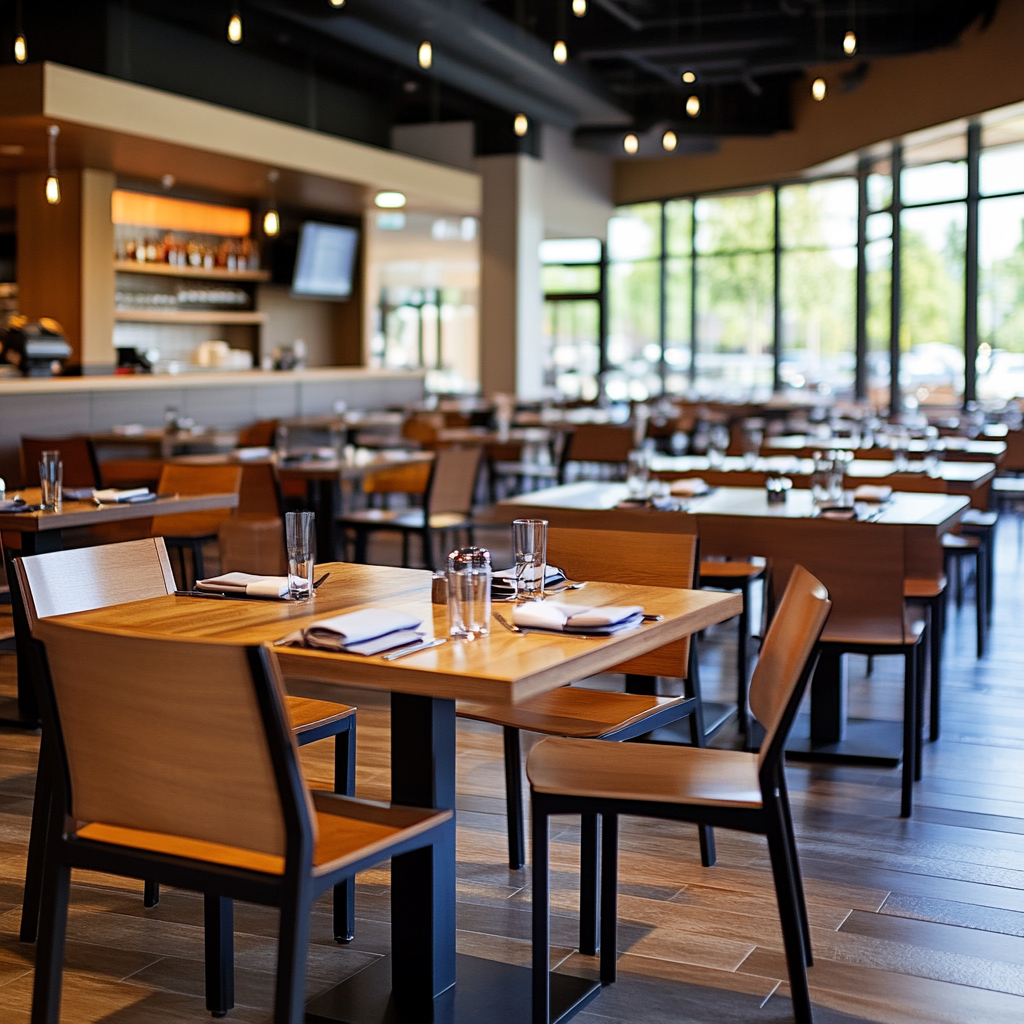
The Hidden Cost of Choosing the Wrong Restaurant Tables
Many operators focus on initial purchase price and overlook maintenance.
Unstable or poorly constructed tables result in:
Frequent tightening and repairs
Shorter replacement cycles
Inconsistent dining experience
Long-term maintenance cost often exceeds the initial savings of cheaper tables.
Why Commercial Restaurant Tables Are Built Differently
Commercial restaurant tables are engineered to handle:
Constant movement and rearrangement
Repeated cleaning and moisture exposure
High guest turnover throughout the day
Stability, durability, and service compatibility matter more than decorative details.
How Restaurants Should Evaluate Tables Before Ordering
Experienced buyers assess tables by asking:
Does the base provide real stability under uneven load?
Is the structure suitable for daily commercial use?
Can replacement parts or matching tables be sourced later?
A well-chosen restaurant table supports service flow instead of interrupting it.
Final Takeaway
Restaurant tables are not passive furniture pieces.
They influence service speed, guest comfort, and long-term operating cost every single day.
Choosing commercial-grade tables with proper base design and stability is a practical investment, not an aesthetic upgrade.


