1. How Table Materials Influence Guest Perception
The material of a table sends a message before the menu even arrives.
Solid wood communicates warmth, craftsmanship, and hospitality.
Sintered stone and marble create a sense of luxury and premium value.
Laminate with anti-scratch coating balances practicality with modern appeal.
Metal frames signal durability, stability, and contemporary design.
Guests instinctively judge the restaurant’s quality based on detail. A stable, beautiful table enhances trust and sets the tone for the meal.
2. Durability: The Silent Factor Behind Long-Term Profit
Restaurant tables face constant impact: hot plates, spills, cutlery scratches, and daily cleaning. Choosing the right material saves thousands in replacement costs. Operators now prioritize:
These functional upgrades keep tables looking new even after years of service—critical for chain restaurants and high-traffic cafés.
3. Stability and Safety: The Essentials Guests Never Talk About
A wobbly table damages far more than convenience. It compromises food presentation, irritates customers, and disrupts service flow. High-quality restaurant tables focus on:
In professional dining environments, stability is a non-negotiable standard, not a design choice.
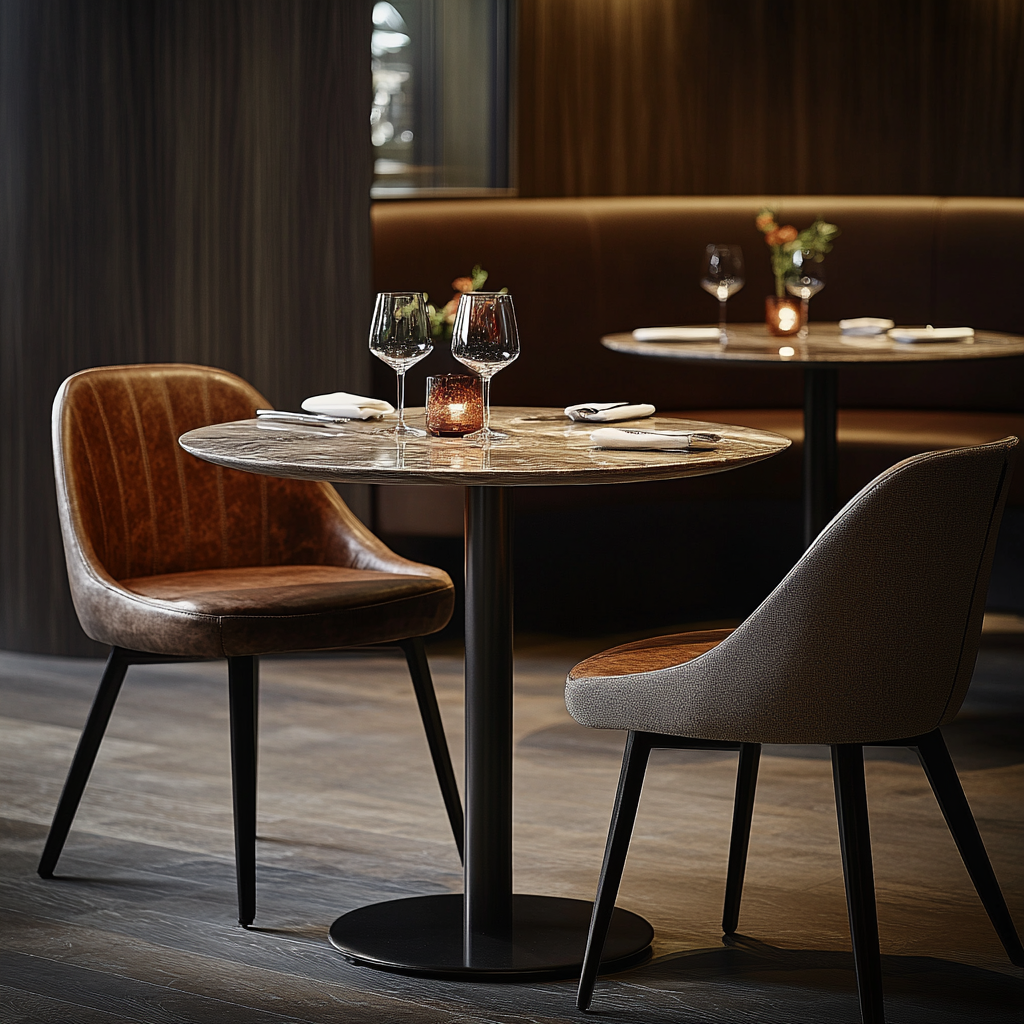
4. Table Shapes and Layout Strategy for Maximum Revenue
Each table shape serves a functional purpose:
Square tables optimize space for couples and small groups.
Round tables promote social interaction and work well for shared dishes.
Rectangular tables are ideal for banquettes and linear layouts.
Modular tables quickly convert from 2-top to 4-top, supporting peak-hour flexibility.
A strong layout strategy ensures smoother circulation, faster service, and higher table turnover—directly increasing revenue per hour.
5. Color and Texture: The Subtle Power of Modern Table Design
Modern restaurant tables use color and texture to reinforce brand identity:
Matte black for contemporary and premium brands
Warm walnut for upscale comfort dining
Calacatta-style stone for fine dining impressions
Light oak for Scandinavian or café ambience
Textures matter. A slightly matte surface reduces glare, photographs better for social media, and makes plating visually appealing—an advantage in the age of Instagram dining.
Conclusion
Restaurant tables do far more than hold plates and glasses. They shape guest perception, operational efficiency, and long-term maintenance costs. When operators choose the right materials, finishes, and layout strategy, the table becomes a competitive advantage that enhances both experience and revenue.


