The Future of Restaurant Seating: How Comfort, Durability, and Design Drive Guest Loyalty
This article covers the latest shifts in restaurant seating—comfort engineering, durable materials, modular layouts, and brand-driven aesthetics—showing how furniture directly improves guest satisfaction and operational performance.
1. Comfort as the Core of Guest Experience
Comfort dictates how long guests stay, how much they order, and whether they return. Modern restaurants now prioritize:
Supportive curves that follow natural posture
High-density foam engineered for commercial use
Upholstery that maintains shape after thousands of cycles
Seat heights tailored to table dimensions
When seating is engineered correctly, the guest forgets the chair entirely—they simply enjoy the meal.
Comfort is not a luxury; it is a business tool that strengthens the entire dining experience.
2. Materials That Withstand Real Restaurant Reality
Restaurant seating must endure years of heavy use. Operators are increasingly choosing:
Performance fabrics that resist stains and moisture
Powder-coated metal legs for structural stability
Solid wood frames for warm ambiance with long lifespan
Anti-scratch laminates for high-traffic environments
These upgrades reduce replacement cycles, lower operational costs, and protect the restaurant's image.
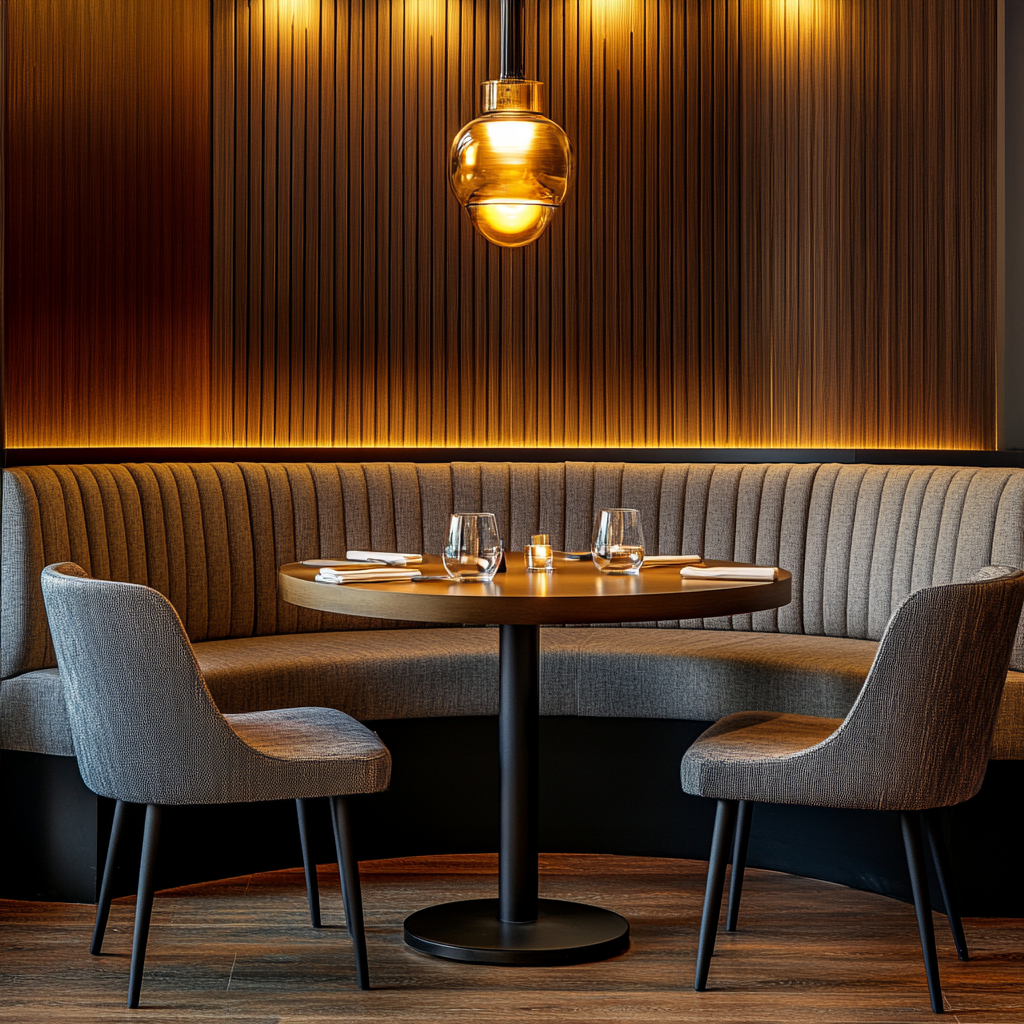
3. Aesthetic Identity That Reinforces the Brand
Design trends are moving toward purposeful minimalism, textural contrast, and sophisticated color palettes such as deep blue, warm taupe, and matte black.
Restaurants now view seating as part of their brand identity—not an afterthought. Whether it’s elegant curved lounge chairs for fine dining or modular benches for modern cafés, furniture communicates who you are before the menu arrives.
4. Modular Seating: The Future of Flexible Operations
The rise of group dining, private events, and mixed-use spaces has fueled demand for modular seating systems. Restaurants want:
Seats that can be rearranged quickly
Banquettes that convert from two-top to four-top
Furniture that adapts to changing peak hours
Flexibility is now a competitive advantage.
Conclusion
The restaurants succeeding today treat seating as part of their business strategy. When comfort, durability, and design align, the result is a dining experience that feels effortless and memorable. Well-designed seating doesn’t just fill a room— it fills tables.


