
Ron Wong
86-13380258855
sales@rongroup.co

Most restaurants require several core categories, including cooking equipment, refrigeration, food preparation equipment, warewashing systems, storage and front-of-house supplies. Depending on the concept, this may include commercial ranges, ovens, grills, refrigerators, freezers, stainless steel worktables, shelving and dishwashing equipment.
The front of house also needs to be planned at the same time. Restaurant tables, chairs, booth seating, dinnerware, glassware and cutlery should match the seating plan and service style, which is why a commercial kitchen equipment list should never be created completely separately from the rest of the restaurant.
Fine Dining Restaurant
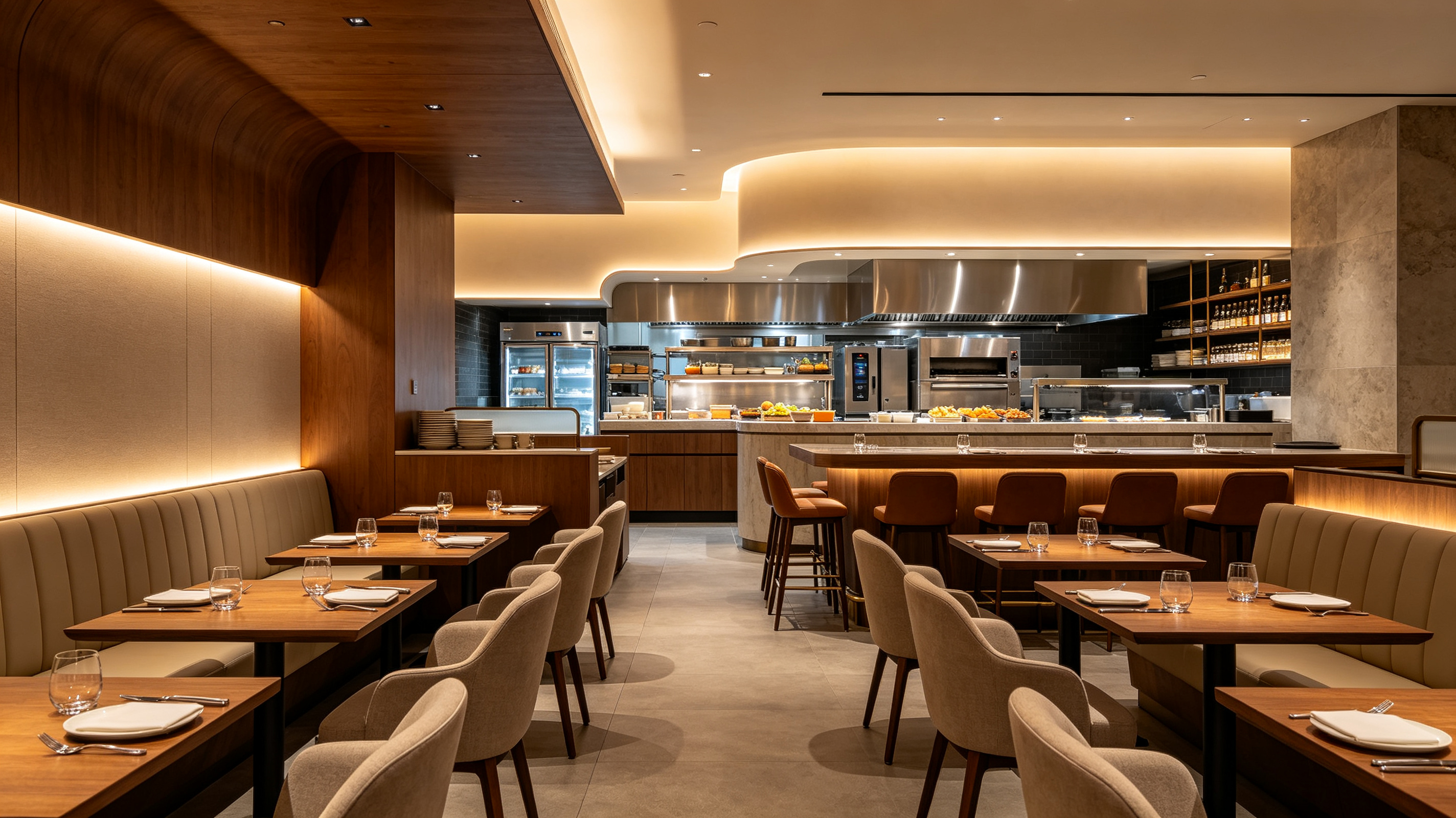
Fine dining restaurants usually require a more carefully specified equipment package because kitchen performance and guest presentation are equally important. Commercial ovens, ranges, refrigeration and dedicated preparation stations need to support precise cooking and consistent service during peak periods.
The dining area typically places greater emphasis on premium restaurant furniture, custom booth seating, porcelain dinnerware, quality glassware and cutlery. Instead of purcasing more products, fine dining projects usually benefit from better materials, better coordination and a more consistent visual identity.
Steakhouse
A steakhouse equipment list should be centered around meat preparation, high-temperature cooking and refrigeration. Commercial grills, charbroilers, ovens, preparation tables, ventilation systems and sufficient cold storage are usually among the most important items.
The front of house often requires durable restaurant tables, upholstered dining chairs, booth seating, steak knives, plates and barware. The goal is to create enough kitchen capacity for busy service without purchasing oversized equipment that takes up unnecessary space or increases project costs.
Café & Coffee Shop
A cafe equipment list usually begins with the beverage station. Commercial espresso machines, coffee grinders, water filtration systems, refrigeration and ice equipment are common essentials, while cafés serving food may also need compact ovens, preparation equipment and refrigerated display units.
Because many cafés operate in smaller spaces, furniture planning is equally important. Compact tables, commercial dining chairs and flexible seating arrangements can increase capacity while maintaining comfortable circulation and a more open customer experience.
Fast Casual Restaurant
Fast-casual restaurants depend on speed, durability and repeatable workflows. Their equipment package often includes fryers, griddles, ovens, refrigeration and efficient preparation stations selected according to the menu rather than simply following a generic restaurant supplies list.
Front-of-house furniture should follow the same principle. Durable commercial chairs, easy-to-clean tabletops and practical tableware are usually more valuable than complicated decorative products because they reduce maintenance and support faster daily operations.
Buffet Restaurant
Buffet restaurants require equipment for both food production and food holding. In addition to standard commercial kitchen equipment, the project may include buffet stations, chafing dishes, warming equipment, beverage dispensers, serving utensils and larger quantities of dinnerware.
Furniture layout also becomes especially important because guests move continuously between dining tables and food stations. Wider circulation routes, clearly planned buffet zones and sufficient seating clearance can have as much impact on operations as the equipment itself.
Bar & Restaurant
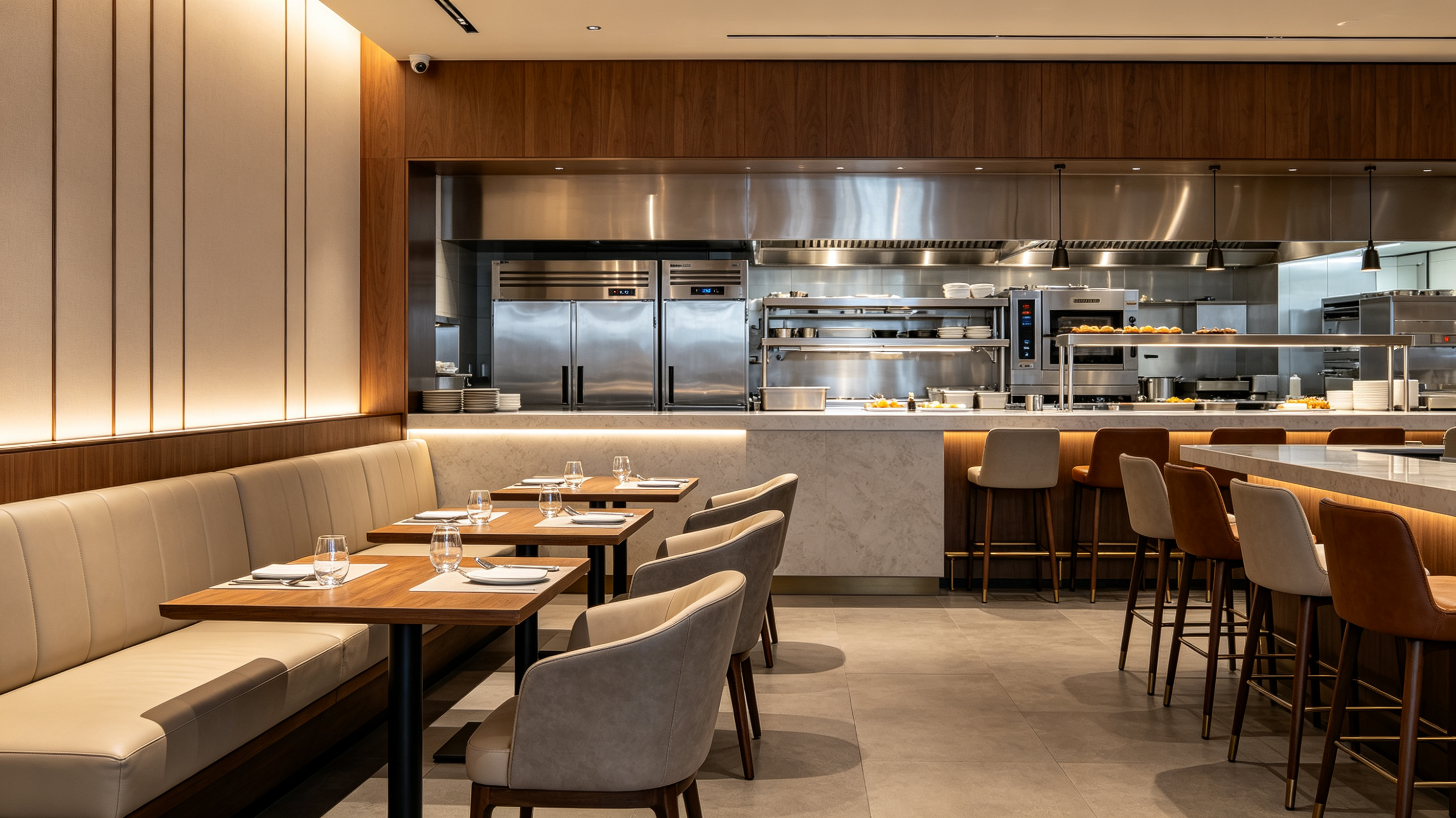
A bar and restaurant effectively combines two operating areas within one project. Alongside normal kitchen equipment, the bar may require ice machines, under-counter refrigeration, sinks, glasswashers and beverage preparation equipment, together with sufficient glassware and barware for peak periods.
The seating area should also feel visually consistent. Bar counters, bar stools, dining tables and chairs should be coordinated in materials, colors and proportions so the bar and dining room feel like one restaurant rather than two unrelated spaces.
Build Your Equipment List Around Your Restaurant
The best restaurant equipment list is not the longest one. Every item should have a clear purpose based on the menu, expected volume, workflow and floor plan, and major equipment dimensions should be confirmed before purchasing begins.
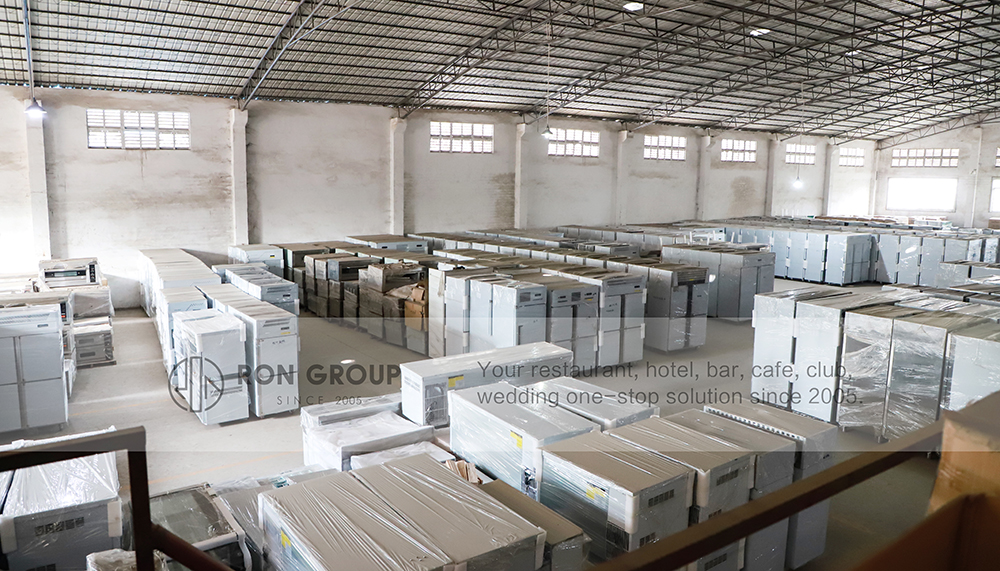
RON GROUP provides one-stop restaurant supply solutions covering commercial kitchen equipment, restaurant furniture, dinnerware, glassware, cutlery, barware, buffet equipment, lighting and other restaurant supplies. By coordinating multiple categories through one supply chain, RON GROUP can help customers save up to 65% on overall project purchasing costs, depending on the project requirements and purchasing structure.
Final Takeaway
There is no universal answer to what equipment every restaurant should buy. The right equipment package depends on the concept, menu, service style and available space, and purchasing decisions should always support the way the restaurant will actually operate.
Instead of asking, “What equipment should every restaurant have?”, a better question is: “What does my restaurant actually need to operate efficiently?” That approach helps control costs, avoid unnecessary purchases and create a more practical opening plan.


Ron Group
86-13380258855
sales@rongroup.co
